


Views: 0 Author: Site Editor Publish Time: 2025-10-28 Origin: Site


You can watch how a plywood hot press machine changes thin veneer sheets into strong plywood by following three easy steps. This process is fast and gives the same results each time. New machines use heated platens and pressure to stick wood layers together. This makes better plywood and saves time compared to old ways. Every step in the process is important if you want good, strong plywood.
Putting veneer sheets in the right way is very important for strong plywood. Each layer should fit well to make good quality.
Cross-grain construction makes plywood stronger. This way stops it from bending and twisting. It helps the plywood stay steady.
Using the correct heat and pressure is needed. Good settings help the glue stick well. This makes the plywood last longer.
Cooling the plywood after pressing matters a lot. Letting it cool right makes the glue harden all the way. The panels stay flat.
Checking often keeps the quality high. Looking for problems means only the best plywood gets sent out. This meets high standards.

To make plywood, you first put veneer sheets into the hot press machine. This step helps build strong and good panels. You need to be careful so each layer fits just right.
You place veneer sheets in a certain order. Most plywood uses cross-grain construction. This means each sheet’s grain goes the opposite way of the one below. This makes the plywood stronger and steadier. You can see this in many plywood pieces. The layers do not bend or twist easily. Some machines, like ours, use automatic layup systems. These systems line up each sheet fast and correctly. You get the same results every time and save time.
Cross-grain construction makes plywood hold more weight.
Perpendicular grain stops the layers from twisting.
Automated layup machines work faster and make fewer mistakes.
Tip: Always check if the veneer sheets are too wet. Too much water can make your plywood worse.
Getting the sheets lined up right is very important. Every sheet must match up with the others. If you do not line them up, you can get weak spots and rough surfaces. Our special loading solutions use position adjusting and edge aligning. These keep all the layers straight and even.
Here is how you usually align the sheets:
Put veneer sheets into the system.
Move them to line up right.
Make sure the sheets are all the same height.
Line up the edges so they bond well.
Press the sheets together tightly.
Seal the press line so the glue sticks.
Stack the finished plywood automatically.
Equipment Name | Description |
|---|---|
Fully Automatic Loading and Unloading High-Rise Hot Press | This machine, made by Linyi Zhonghe Import and Export Co., Ltd., is fully automatic. It loads and unloads veneer sheets very accurately. This makes the process faster and better. |
Veneer Processing Machines | These are slicing machines, drying machines, and hydraulic lifts. Each one helps you handle veneer sheets safely and easily. |
When you use our plywood hot press machines, you get great results every time. Many people trust our machines for their work. If you want to know more, visit our website to see details about hot press machines and other plywood equipment.
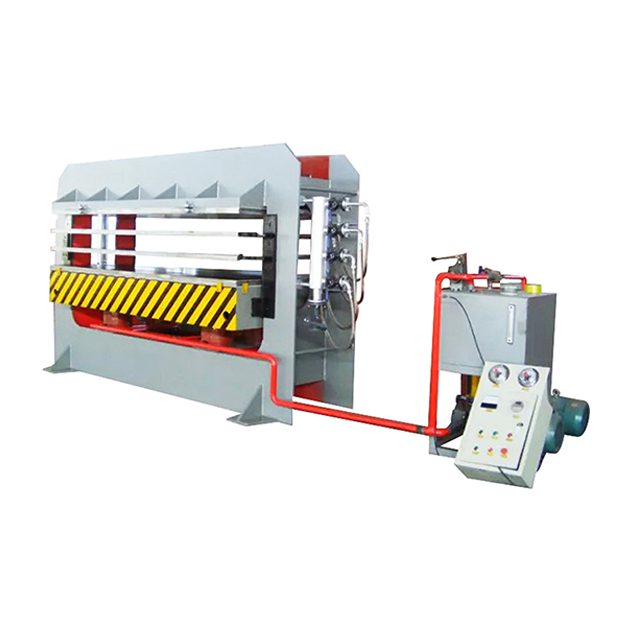
When you use a plywood hot press machine, you start gluing and pressing. This step makes plywood strong and good quality. You must watch the temperature and pressure closely. This helps the layers stick together well. The hot press uses new technology to work faster and make the same plywood every time.
You set the hot press machine to 150°C to 200°C. This heat makes the glue start to work. Different glues react to heat in their own ways. Thermosetting adhesives like urea-formaldehyde and phenol-resorcinol-formaldehyde get hard and strong with heat. Some companies now use thermoplastic adhesives for greener plywood.
Heat moves from the hot press plates to the veneer layers. This happens by conduction. If the veneer is wetter, it heats up more quickly. Steam forms on the outside and moves to the middle. This makes the inside of the panel hotter. When it gets to 100°C, water turns to steam and raises the pressure inside.
Key Aspect | Description |
|---|---|
Heat Transfer Mechanism | Heat goes from hot press plates to veneer by conduction. |
Moisture Content Impact | More moisture means the veneer heats up faster. |
Steam Movement | Steam moves from the outside to the center, raising pressure inside. |
Temperature Dynamics | Temperature rises as steam moves, changing fast at 100°C. |
You use high pressure to press the layers together. This force is very important for good plywood. For example, a hot press machine with four cylinders at 25MP can press with over 800 tons of force. This pressure makes the glue hard and keeps the layers tight. That is how plywood gets its strength.
The pressure helps the glue get hard the right way.
Even pressure stops weak spots and makes better plywood.
High pressure keeps the plywood strong and steady.
Advanced hot press machines from Linyi Zhonghe Import and Export Co., Ltd. have many good points. They help you make more plywood in less time. The machine does not stop often and keeps steam moving. You also get better plywood because the machine controls the heat very well. You save money because the machine uses less fuel and water.
Better efficiency: Good hot press machines make more panels quickly.
Better product: Even heat and pressure make the plywood the same every time.
Steady work: Machines run for a long time and help you make more plywood.
Hot pressing can affect the environment. The process uses energy from things like wood or fossil fuels. This can make pollution. Some factories use bark and wood scraps to make less waste and lower pollution.
Tip: Always check the temperature and pressure when gluing and pressing. This helps you make the strongest and best plywood.
After pressing, you need to let the plywood cool down. This step is very important for making strong plywood. Cooling helps the glue finish getting hard. It also makes the plywood stable. You should let the panels cool for about 24 hours. This gives the glue time to set all the way. The panels also reach room temperature. If you skip or rush this step, the plywood might not be strong. It could also be uneven or not flat.
Machines use different ways to cool the plywood. Some use heat transfer oil. This method gives steady cooling and a smooth, shiny surface. Other machines use water vapor. Water vapor cools fast but can make the surface rough. It can also cause water drops or uneven cooling. Look at the table below to see the differences:
Cooling Method | Advantages | Disadvantages |
|---|---|---|
Heat Transfer Oil | Steady cooling, smooth boards, shiny surface | Works better than water cooling |
Water Vapor | Cools quickly | Can make rough boards, uneven cooling, water drops, and takes longer to drain |
When the plywood is cool, you take it out of the press. Machines can help move the panels safely and quickly. After unloading, you need to check each sheet for quality. This step makes sure only the best plywood gets sent out.
You follow careful steps to check for problems and measure the panels. Here is a table that shows the main inspection steps:
Stage of Inspection | Description |
|---|---|
Raw Material Inspection | Checks if the wood veneer is good and has no problems. |
Thickness and Dimensional Testing | Measures how thick and big the panels are to meet standards. |
Strength and Stiffness Testing | Tests how strong and stiff the plywood is for safety. |
Surface Inspection and Finishing | Looks for scratches or defects and makes sure the surface is smooth. |
Moisture and Water Resistance Testing | Checks if the plywood can handle water without getting ruined. |
Final Inspection Before Delivery | Makes sure every sheet is good and has no problems before sending it out. |
During inspection, you look for common problems like:
Warping
Delamination
Voids and gaps
Blisters
Discoloration
Splitting
Dimensional changes
Core problems
Uneven surface
You must meet high standards for quality. Plywood made in your country often follows stricter rules than imported plywood. This means you can trust the results. By doing these steps, you make sure every sheet is strong, flat, and ready to use.
You can see how loading, pressing, and cooling help make strong plywood. Hot press machines have a simple design. They let you make panels fast and with the same quality each time.
The machines are easy to use and do not need much fixing.
Customers say the plywood always turns out well.
New machines have smart sensors and special controls.
Innovation Type | Description |
|---|---|
Smart Technology | Sensors and AI help set pressure, temperature, and time. |
Energy Efficiency | Machines use less power but still work well. |
If you learn about each step, you will know how plywood is made in factories. You can trust the results and see how new technology helps make better plywood.
A plywood hot press machine sticks veneer sheets together. The machine uses heat and pressure. This makes the plywood strong. You get the same quality in every panel. It helps you work faster and makes the plywood last longer.
A plywood hot press machine makes the work go faster. It presses many sheets at one time. You save both time and energy. You get the same quality each time. You also waste less wood when making plywood.
Consistent quality means every sheet is made well. You do not get broken or weak panels. This helps you build strong things. People trust your plywood more. You get more good results from your work.
You can pick plywood hot presses that fit your factory. These machines match what you need. You can change the pressure, temperature, and size. This helps you work better and make the right plywood.
You get strong plywood and make it faster. The machine helps you save money. You control the way you make plywood. You also make more panels and get better results.


