


Views: 0 Author: Site Editor Publish Time: 2026-07-15 Origin: Site


In industrial plywood manufacturing, profitability is won or lost in moisture control. Inconsistent moisture content leads to pressing defects, glue failure, and severe production bottlenecks. Transitioning from green veneer to press-ready sheets requires highly precise thermal management. Outdated or undersized drying systems throttle overall plant capacity and inflate energy overhead unnecessarily. You must balance machine speed, internal temperature, and airflow perfectly.
Investing in modern, continuous veneer drying equipment shifts the drying process from a variable risk to a controlled, high-yield operational asset. You will discover how advanced technology eliminates daily factory bottlenecks effectively. We will explore key equipment criteria, direct operational benefits, and realistic implementation steps. Ultimately, you will learn how optimized drying secures higher plywood grades and maximizes daily cubic meter output.
Quality Control: Precise moisture leveling prevents delamination (blows), warping, and poor adhesive bonding during the hot press phase.
Throughput Scaling: Continuous roller or mesh dryers eliminate batch-processing bottlenecks, dramatically increasing daily cubic meter output.
Cost Efficiency: Modern thermal recovery and targeted jet-drying reduce energy consumption per dried sheet, shortening the CapEx payback period.
Buyer’s Mandate: Selecting the right equipment requires aligning the heating medium, footprint, and automation capabilities with your plant’s specific wood species and volume targets.
Uneven moisture profiles dictate daily production struggles. Wet pockets plague inefficient mills frequently. They cause sudden steam expansion during the hot pressing phase. The intense heat turns trapped water into high-pressure vapor instantly. This trapped steam physically forces delicate veneers apart. The timber industry calls these catastrophic failures blow-outs. You lose perfectly usable panels almost instantly. These costly defects force immediate panel downgrades. Downgraded panels fetch much lower market prices globally. The financial impact compounds quickly over a fiscal year.
Conversely, over-drying creates a completely different operational disaster. Bone-dry wood becomes extremely brittle and fragile. Dry sheets crack during routine factory handling. Surface checking ruins the high-value face grade. You experience excessive shrinkage across the full panel width. Usable material yield plummets rapidly. The mill wastes valuable timber resources continuously. You pay premium prices for raw logs. You sell significantly less finished plywood. The profit margin disappears rapidly.
Legacy systems compound these fundamental manufacturing issues. Batch kilns offer highly unpredictable timelines. Air-drying depends completely on erratic local weather patterns. Rain or high humidity stalls production completely. Both legacy methods demand excessive manual labor. Workers constantly load and unload heavy transportation carts. This operational drag cripples daily factory output. A modern continuous plywood line demands steady material input. You cannot feed high-speed presses reliably. Slow, batch-based moisture reduction methods restrict the entire business.
Advanced thermal systems guarantee consistent product quality. Uniform moisture content ensures highly reliable adhesive bonding. A modern veneer dryer utilizes precisely engineered jet boxes. These specialized jet boxes deliver highly uniform heat distribution. They blast hot air directly onto the wet wood surface. All sheets consistently hit the target moisture content. The standard target generally ranges from 4% to 8%. Jet technology levels out initial moisture variations perfectly. Sapwood holds more water naturally. Heartwood arrives much drier. The equipment handles both variations simultaneously without issue.
Superior surface integrity defines premium plywood grades. Roller-type configurations deliver this specific mechanical advantage. Heavy steel rollers apply slight physical pressure constantly. Sheets move through the heated chambers smoothly. This mechanical pressure keeps them completely flat. Flat sheets resist buckling under extreme heat stress. A perfectly flat surface allows uniform glue spread later. Resin coats the exposed wood fibers evenly. You achieve fundamentally stronger chemical bonds.
Rapid heating causes severe thermal shock. Thin-peeled woods split easily under sudden stress. Modern equipment prevents this physical damage proactively. Integrated cooling zones sit right at the exit point. They lower the sheet temperature very gradually. Controlled cooling preserves structural integrity beautifully. You handle fragile peeled sheets safely downstream.
Relying on manual touch tests instead of digital moisture meters.
Ignoring seasonal ambient humidity changes in the factory environment.
Skipping routine calibration protocols for internal temperature sensors.
Mixing sapwood and heartwood randomly in the exact same run.
Failing to clean heavy pitch buildup inside the ventilation ducts.
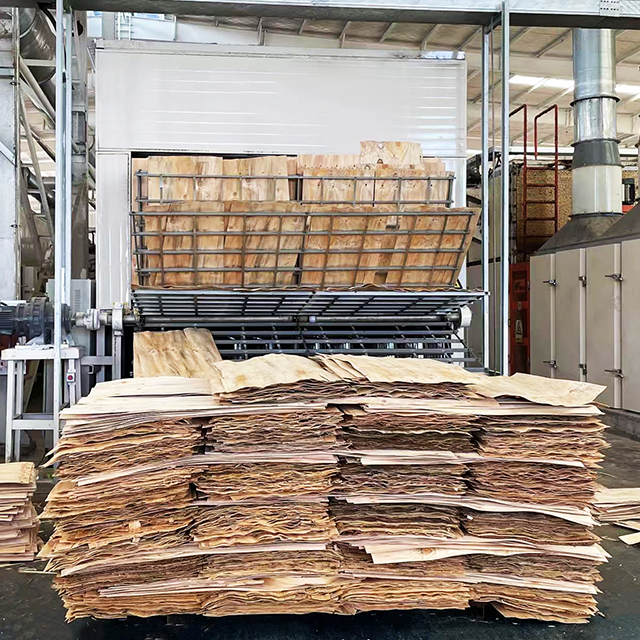
Continuous flow fundamentally changes daily factory dynamics. Automated feeding systems replace slow forklift deliveries. Sheets enter the long heating chambers continuously. This seamless throughput completely eliminates wasteful idle time. You stop waiting for long batch cycles to finish. Continuous flow directly multiplies daily production capacity. Mill managers see dramatic cubic meter gains instantly. The entire downstream pressing line runs faster. You maximize the financial return on all factory assets.
Optimized heat transfer accelerates the entire manufacturing cycle. High-velocity impingement technology drives modern structural designs. Engineers call this efficient process jet drying. Steam naturally forms a boundary layer around wet wood. This invisible protective layer resists efficient heat transfer. High-speed air jets break this boundary layer forcefully. They accelerate the moisture evaporation process effectively. You achieve faster drying times naturally. You avoid dangerously high baseline temperatures inside. Lower baseline temperatures protect the delicate wood fibers. Unnecessarily high temperatures darken the wood surface.
Energy consumption dictates overall mill profitability. Integrated energy recovery systems capture wasted heat efficiently. Exhaust steam normally vents out into the open atmosphere. Heat exchangers capture this valuable thermal energy instead. They use it to pre-heat incoming fresh air. This lowers your boiler BTU requirements significantly. Electrical and fuel costs drop per cubic meter. You shorten the capital expenditure payback period.
The following chart illustrates typical energy consumption metrics across different system configurations.
System Configuration | Drying Time (Minutes) | Energy Cost Factor | Throughput Level |
|---|---|---|---|
Legacy Batch Kiln | 120 - 180 | Extremely High | Low |
Standard Roller System | 10 - 15 | Moderate | Medium |
Jet Dryer + Heat Recovery | 5 - 8 | Low | Very High |
Selecting the perfect setup requires strict objective evaluation. You must analyze your specific facility infrastructure first. Heating medium compatibility is the absolute top priority. You can choose thermal oil, steam, or direct-fired burners. Direct-fired gas or biomass burners provide intense heat quickly. Thermal oil offers exceptional long-term temperature stability. Steam systems utilize existing factory boiler setups. Match your final choice to existing plant boilers carefully. Evaluate local energy costs meticulously before purchasing.
Conveyor types determine your final product range. Roller configurations handle thicker, standard sheets best. The driven rollers push the wood forward efficiently. Wire mesh or band configurations serve very different needs. They are essential for thin, fragile, or sliced face veneers. Mesh belts support delicate wood gently underneath. They prevent tearing during the fast transport phase. You avoid jamming the internal machine entirely.
Automation dictates daily operational success and workplace safety. Integrated moisture meters enable automated dry veneer sorting. They separate sheets needing a second pass automatically. Automated climate controls monitor incoming green moisture continuously. They adjust belt speed and internal temperature instantly. Your human operators intervene much less often. The machine optimizes itself in real time.
Footprint and modularity matter for future factory growth. Consider your long-term scalability very carefully. Factory floor space remains an expensive commodity. A modular veneer drying equipment design allows easy expansion. You can simply add extra heating sections later. Engineers call these modular sections deck additions. Production targets will likely increase next year. Modular machines grow alongside your expanding business perfectly.
Determine maximum daily cubic meter targets realistically.
Evaluate local biomass fuel versus natural gas pricing trends.
Measure available factory floor length precisely before ordering.
Identify the absolute thinnest peel thickness required for production.

Major equipment upgrades require highly careful project orchestration. Acknowledge the realistic timeline for integration upfront. A modular setup requires significant floor preparation work. You must pour reinforced concrete foundations carefully. Laser alignment ensures smooth, trouble-free roller operation. Anticipate temporary line disruption during the main installation phase. Plant managers must schedule downtime strategically. Weekends or holiday shutdowns minimize lost factory revenue.
Operator adoption determines your final production success. Comprehensive staff training ensures smooth daily operations immediately. Modern machines use complex Programmable Logic Controller (PLC) systems. Operators must understand these digital interfaces perfectly. Poorly trained staff cause operator-induced inefficiencies constantly. They might manually override automated moisture recipes out of habit. Proper technical training prevents these highly expensive human mistakes.
Environmental compliance remains strictly non-negotiable today. Address industry-standard EPA/AP-42 considerations proactively. You must manage volatile organic compound (VOC) emissions safely. High-temperature wood processing creates a visible blue haze. Wood dust accumulates quickly inside exhaust ducts. Modern systems require proper exhaust management continuously. Wet electrostatic precipitators (WESP) integrate directly into the exhaust line. They scrub dangerous pollutants before releasing air outside. You avoid regulatory fines completely.
Maintain realistic operational expectations always. Variable assumptions govern daily output calculations heavily. Drying times will fluctuate naturally throughout the year. Seasonal ambient temperatures affect boiler efficiency greatly. Cold winter air requires more pre-heating energy inside. Species density impacts water evaporation rates heavily. Low-density softwood dries much faster overall. Dense hardwood requires slower speeds and longer dwell times. You must adapt your schedules accordingly.
Follow a clear shortlisting logic for facility upgrades. Prioritize your specific daily drying volume needs first. Consider your factory energy compatibility next. Finally, evaluate advanced digital automation features closely. These simple steps ensure a highly tailored machinery selection. You align the equipment investment directly with your actual business goals.
The ROI verdict remains overwhelmingly positive universally. Modern machinery is undeniably capital-intensive initially. However, it reduces expensive press blows significantly. You eliminate massive amounts of costly glue waste. You capture lost thermal energy continuously every shift. These combined operational factors make modern technology a foundational upgrade. Competitive mills cannot survive using outdated moisture control methods anymore. You must modernize to remain profitable.
Take immediate next-step action today. We recommend initiating a comprehensive plant audit soon. Analyze your current baseline energy costs closely. Identify your exact peak factory bottleneck times. Measure your current target moisture variances daily. This empirical data helps you size the right system perfectly. You approach the procurement process with solid engineering facts.
A: The standard target range is typically 4% to 8%. Falling short of this range leaves wet pockets, causing steam blow-outs during hot pressing. Exceeding it creates brittle wood and surface checking. Proper moisture levels ensure strong, durable urea-formaldehyde or phenolic resin bonds.
A: Yes. However, it requires variable speed drives and highly adjustable temperature profiles. Low-density softwoods dry significantly faster. Dense hardwoods require slower belt speeds and longer dwell times. Operators must adjust the climate control recipes whenever switching wood species.
A: You can typically expect a transparent payback timeframe of 18 to 36 months. This realistic estimate relies heavily on energy savings, drastically reduced reject rates, and increased overall line speed. Your exact timeline depends on the scale of your operation and local energy costs.
A: Realistic ongoing needs include cleaning pitch and resin buildup regularly. You must inspect bearings inside high-heat zones frequently. Calibrating internal moisture sensors prevents dangerous fire hazards. Consistent maintenance guarantees smooth operation and prolongs the total lifespan of your heating chambers.


