


Views: 0 Author: Site Editor Publish Time: 2026-08-12 Origin: Site


Rising raw timber prices put extreme pressure on profit margins. Minor inefficiencies during peeling compound quickly. They create massive annual revenue leaks for mill operators. You simply cannot ignore these daily losses. Relying on legacy equipment artificially limits recovery rates. Old systems leave usable high-value wood stuck on the log core. You also lose precious material to thickness variations.
We must change how we process raw logs. Modern mills require a better evaluation framework. Upgrading to a modern Veneer Production Machine solves these critical issues. This upgrade transforms raw material utilization. We will focus on specific mechanical advancements today. You will learn how these innovations directly translate to measurable yield improvements. We will also show you how to secure a verifiable return on investment.
Core Reduction: Modern spindleless technology allows mills to peel down to significantly smaller core diameters, maximizing output from every log.
Precision Control: Automated scanning and dynamic blade adjustments eliminate inconsistent veneer thickness, reducing rejection rates.
Small Log Utilization: Upgrading your Veneer Peeling Machine turns previously unprofitable small-diameter plantation logs into viable raw material.
Measured ROI: Equipment upgrades should be evaluated not just on throughput speed, but on the verifiable percentage increase in raw material recovery against implementation downtime.
You must treat your veneer recovery rate as a critical business metric. It serves as the direct link between raw log procurement costs and final plywood profit margins. Recovery rate measures the volume of usable veneer produced from a given log volume. Every millimeter of wasted wood directly erodes your net profit. Mill operators often struggle to optimize this metric using outdated technology.
Traditional manufacturing setups lose yield in three major areas. First, legacy chuck-driven machines leave massive residual core dropouts. They often leave 80mm to 100mm of perfectly usable wood behind. This core waste represents thousands of cubic meters of lost material annually. You effectively pay for timber you never convert into sellable product.
Second, older machines produce severe lathe checks. They generate rough surfaces across the wood sheet. Downstream processing must correct these defects. Workers apply excessive sanding just to meet quality standards. Sanding removes precious thickness. It wastes material and slows down your overall production line.
Third, legacy equipment cannot process irregular logs efficiently. Small-diameter logs often splinter or spin out. Your operation misses out on cheaper timber sources. A successful machine upgrade must fix these specific failures. It must demonstrate a stark reduction in raw material waste. Crucially, it must achieve this without compromising your continuous line speed.
You can clearly see the performance gap when comparing machine capabilities side by side.
Production Metric | Legacy Peeling Systems | Modern Upgraded Systems |
|---|---|---|
Residual Core Dropout | 80mm - 100mm | Below 40mm |
Thickness Tolerance | High variation (±0.15mm) | Micro-precision (±0.05mm) |
Small Log Handling | High spin-out rate | Stable surface driving |
Surface Quality | Requires heavy sanding | Smooth finish, low check depth |
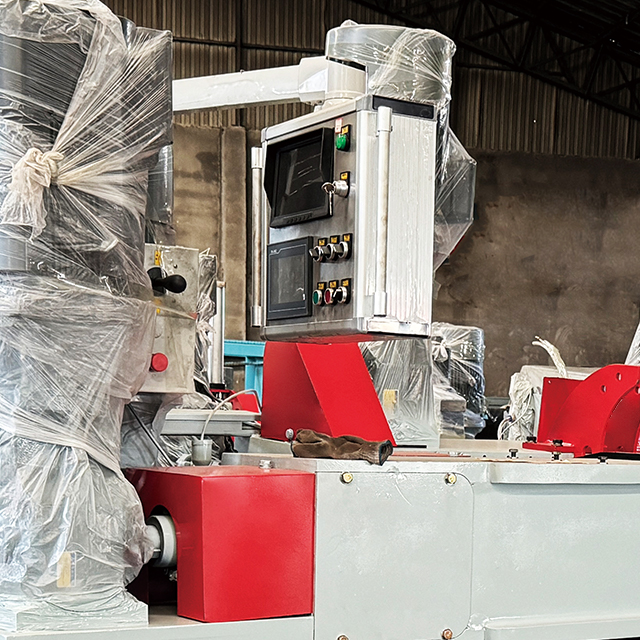
Understanding mechanical innovations helps you make smarter purchasing decisions. Today’s machines look and operate differently than their predecessors. They rely on sensors, automation, and alternative driving mechanisms. These components work together to extract maximum value from your timber.
Spindleless systems represent a massive leap in peeling efficiency. Traditional lathes hold logs via center chucks. These chucks require solid center wood to grip. Soft or rotting centers cause the log to tear. Spindleless systems drive the log from the external surface instead. They use powered rollers to rotate the timber. This approach distributes driving force evenly across the log face.
This technology provides a massive yield benefit. It allows mills to peel down to 40mm or less. You extract maximum continuous sheets from the exact same log. Smaller cores mean more sellable product. You turn waste into revenue instantly.
Log centering dictates the success of the entire peeling cycle. Poor centering creates excessive "fish-tails" and broken ribbons. Modern machines utilize laser and optical scanners before peeling begins. These sensors build a 3D profile of the incoming block. The system analyzes sweep, taper, and surface irregularities.
This scanner calculating the optimal cutting axis yields immediate benefits. It calculates the geometric center instantly. The lathe aligns the block perfectly before the blade engages. This reduces the initial "rounding off" waste significantly. You get full, continuous ribbons much faster.
Inconsistent thickness destroys plywood margins. Thick spots use too much wood. Thin spots create weak panels. Dynamic knife gap control solves this exact problem. Modern systems use CNC motors to adjust the blade pitch in real time. The machine alters the angle as the log diameter decreases.
This automated pitch control maintains exact thickness tolerances. It prevents the production of weak or overly thick veneers. Consistent sheets sail through downstream quality checks. They require less glue during pressing. They press flatter and dry faster.
You must evaluate potential equipment upgrades strategically. Not every machine fits every mill environment. You need machinery aligned with your specific supply chain constraints. Focus your evaluation on three main capability areas.
Small Log Capabilities: The industry continues shifting toward plantation-grown timber. Procurement managers buy eucalyptus, poplar, and other fast-growing species. These logs arrive at the mill with much smaller diameters. You must evaluate machines based on their specialized handling of these specific species. A high-quality Veneer Peeling Machine prevents splitting and spin-outs when processing these delicate, small-diameter blocks.
Integration with Composing Solutions: Peeling is only half the battle. Your recovery rate also depends on handling narrow strips. Evaluate how the machine's output pairs with advanced composing equipment. High-tech composers stitch narrow or clipped strips into full 4x8 sheets. Seamless integration between the lathe and the composer minimizes downstream waste. You save materials that normally go to the chipper.
Durability and Tolerance Stability: Wood processing environments punish machinery. Dust, moisture, and constant vibration degrade sensor accuracy. A machine's ability to maintain micro-millimeter precision over thousands of operational hours dictates long-term yield consistency. Look for heavy cast-iron frames. Demand high-quality linear guides. Ask manufacturers about their bearing lifespans.
Equipment upgrades require rigorous financial justification. You cannot rely on vague promises of better output. You must build a mathematical model to project your return on investment. This model should isolate specific variables.
You can explain ROI modeling using three specific variables. Track these metrics to build a bulletproof business case.
Variable A: Cost per cubic meter of raw logs. This sets your baseline raw material expense.
Variable B: Percentage decrease in core waste. Dropping your core from 90mm to 40mm yields a specific volumetric gain per block.
Variable C: Reduction in downstream rejects. Measure the decrease in clipping waste and rejected dry sheets.
Multiply the salvaged volume (Variables B and C) by your raw material cost (Variable A). This reveals your daily financial savings.
You must maintain strict skepticism against manufacturers claiming "zero waste." Industrial manufacturing always produces some byproduct. Actual ROI depends heavily on your specific log species. It also depends on your conditioning processes. Operator proficiency plays a massive role in yield realization. Ask vendors for conservative, realistic estimates. Demand data based on the exact timber species you process.
Your payback period defines project success. Compare your modeled material savings against the capital expenditure of the new machinery. A highly efficient mill often recovers its investment quickly. Savings generate cash flow immediately. Reduced wood costs and lower glue usage accelerate the payback timeline. A typical high-performance installation should demonstrate a payback period within 18 to 24 months.
Installing new equipment disrupts standard operations. You must manage implementation risks actively. Failing to prepare your facility leads to prolonged downtime. It also prevents the new technology from reaching its full potential.
Advanced sensors and CNC controls require dedicated upskilling. Your veteran operators must transition from analog levers to digital touchscreens. A high-tech machine operated poorly yields worse results than a well-maintained analog machine. Invest heavily in initial training. Work closely with the manufacturer during commissioning. Teach your operators how to read scanner diagnostics. Show them how to adjust digital pitch profiles.
You cannot ignore your log yard practices. Peeling machinery cannot fix poor log preparation. You must soften the wood fibers correctly before they hit the lathe. Boiling and conditioning protocols must align with the new machine's speed and blade geometry. If you feed cold, dry logs into a high-speed spindleless lathe, the wood will shatter. Recalibrate your heating vats to match the increased throughput.
You must enforce strict preventative maintenance schedules. High-speed automation demands perfection. A misaligned blade on a fast line can ruin hundreds of logs in a single shift. Daily calibration checks are mandatory. Keep your knife grinding equipment in flawless condition. Clean laser sensors every shift to ensure accurate scanning. Precision machinery only delivers precision results when maintained rigorously.
You face intense pressure to maximize material yield. The right equipment upgrade directly addresses this challenge. You should choose your machinery based on your specific log supply. Factor in your average log diameter and timber species. Identify your current primary source of waste. Decide whether you lose more money to large core sizes or to thickness variation. This shortlisting logic ensures you buy the correct solution.
You must take action to validate these concepts. Reach out to equipment manufacturers directly. Request empirical case studies detailing recovery rate improvements. Insist they provide data on species identical to what your mill processes. Finally, schedule an on-site mechanical audit. A thorough audit reveals exactly where your current line bleeds profit. You can then stop those leaks permanently.
A: Industry benchmarks typically range from 45% to 65%. This varies heavily depending on log quality, species, and block diameter. Modern machines push operations toward the higher end of that spectrum. Upgraded optical scanners and spindleless drives reduce rounding waste and core dropouts, pushing recovery rates past 60% consistently.
A: A spindleless lathe uses a surface-friction drive system. Powered rollers rotate the log from the outside. This prevents the log from splitting under pressure. Traditional chucks apply massive force to the center, which often tears through small or soft-centered logs. Surface driving stabilizes the small block entirely.
A: Not inherently. High speeds only reduce quality if the machine lacks stability. Modern lathes feature automated vibration dampening. They also utilize real-time blade pitch adjustments. These combined technologies prevent lathe checks and maintain smooth surfaces, even when operating at very high RPMs.
A: Yes. Modern machines produce much tighter thickness tolerances. They also create a smoother surface finish. This means you see far less variation during the pressing stage. You require less adhesive to fill gaps and imperfections. This significantly reduces glue bleed-through and overall chemical costs.


