


Views: 0 Author: Site Editor Publish Time: 2026-08-12 Origin: Site


High-quality plywood always starts at the peeling stage. A substandard machinery setup creates cascading defects like thickness variations and rough surfaces. These material inconsistencies ultimately compromise hot pressing operations and lower your final panel grading. Upgrading an existing facility or establishing a new line requires deliberate planning. You must match machinery specifications directly with actual raw material inputs and daily capacity goals. Many buyers make the mistake of shopping purely for maximum operational speed. Instead, you need a holistic approach to equipment selection. This guide provides a strategic framework to evaluate technical capabilities and implementation risks. You will learn how to identify the right specifications for your specific wood species and log diameters. By applying these assessment methods, you ensure your capital investment yields a reliable, high-recovery production line. You can then scale operations efficiently while maintaining strict industry quality standards.
Raw log diameter and wood species (hardwood vs. softwood) must dictate your choice between spindle and spindleless veneer peeling machines.
Precision relies heavily on CNC automation and servo-driven knife adjustments to maintain strict thickness tolerances and minimize waste.
Total Cost of Ownership (TCO) extends beyond the purchase price; buyer evaluation must include energy consumption, spare parts availability, and preventative maintenance downtime.
Seamless integration with downstream equipment (veneer clippers, stackers, and hot presses) is critical for avoiding production bottlenecks.
You cannot evaluate machinery without first understanding your specific production baseline. The right equipment must align perfectly with your raw materials. It also needs to meet your daily volume goals. Failing to define these parameters often results in purchasing underpowered or overly complex equipment.
Evaluate the average, minimum, and maximum log diameters your facility processes. Timber varies wildly depending on the region. Frame specific assumptions regarding wood density and moisture content before contacting vendors. High-density hardwoods require significantly more cutting force than softwoods. Moisture content also changes how wood behaves during cutting. Wet logs peel easier but require robust grip mechanisms to prevent slipping.
Measure Log Diameters: Record the largest and smallest logs you process daily.
Assess Wood Density: Categorize your supply as low, medium, or high density.
Test Moisture Levels: Determine if you process green, soaked, or relatively dry logs.
Define the required veneer thickness range for your products. Face veneers usually require extremely tight tolerances. Core veneers allow slightly more flexibility. Acceptable deviation margins are typically measured in fractions of a millimeter. High-grade plywood demands thickness deviations no larger than 0.05mm. Inconsistent thickness creates weak spots during gluing and pressing.
Calculate your required daily production volume in cubic meters (CBM). This metric establishes the minimum peeling speeds your line requires. It also defines the necessary duty cycle. Continuous operations demand heavy-duty components designed for 24-hour workloads. Match your volume goals with the manufacturer's rated output capacity.
Production Metric | Standard Plywood | Marine/High-Grade Plywood |
|---|---|---|
Target Veneer Thickness | 1.5mm - 3.0mm | 0.3mm - 1.2mm |
Acceptable Deviation | ± 0.10mm | ± 0.05mm |
Required Log Conditioning | Minimal boiling | Extensive boiling/steaming |
Operating Cycle | 8 to 16 hours/day | 24 hours/day continuous |
The core architecture of your equipment determines your overall recovery rate. Wood species and initial log sizes dictate this architectural choice. Manufacturers primarily offer two distinct technologies. Understanding their operational differences ensures you maximize timber yield.
These units excel at handling large-diameter logs. They handle heavy, dense hardwoods efficiently. The mechanism uses physical chucks to hold and rotate the log firmly. The primary advantage is superior stability during the initial peeling phase. Chucks prevent heavy logs from vibrating off-center.
However, you must accept certain trade-offs. The physical chucks require a minimum amount of wood to maintain their grip. They leave a larger residual core behind. This residual core represents unpeeled wood waste. If you process highly valuable hardwood, this waste impacts your material efficiency.
These models operate differently. They drive the log using friction rollers without central chucks. They are the best choice for small-diameter logs and plantation timber. A Veneer Peeling Machine utilizing this spindleless design maximizes core utilization.
They offer highly efficient continuous high-speed peeling. You can reduce core waste down to minimal diameters. Many models peel cores down to 20mm or 30mm. The main trade-off is preparation. Spindleless models require pre-rounded logs for optimal performance. Irregularly shaped logs can cause roller slippage.
Modern, high-efficiency plants often deploy both architectures simultaneously. You start by using a spindle machine for the primary peel on a large log. Once the log diameter shrinks to the chuck's limit, you transfer the remaining core. The secondary spindleless machine then processes that core down to its absolute minimum size. This two-step process maximizes yield and ensures no valuable timber goes to waste.
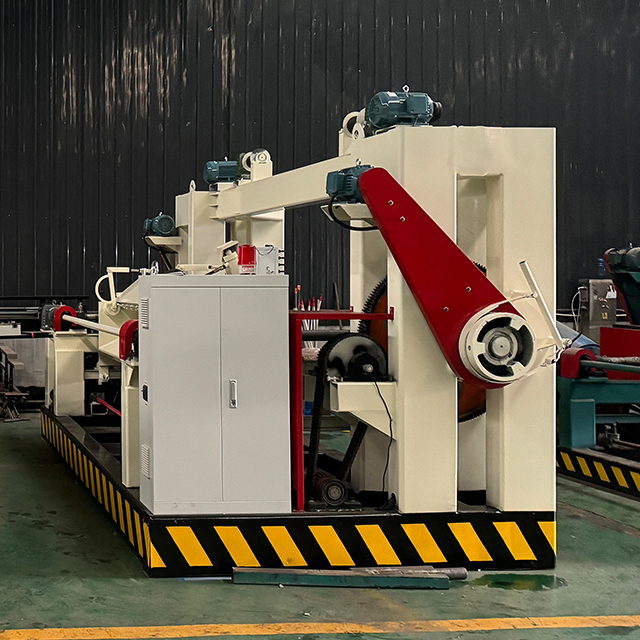
You need to translate machine features into tangible production outcomes. Modern equipment incorporates advanced digital and mechanical technologies. Evaluating these dimensions helps you separate premium machinery from outdated designs.
Evaluate servo-motor driven systems versus traditional mechanical feeds. CNC systems offer precise automated thickness adjustments. They reduce operator error and minimize material waste. Traditional mechanical systems rely on gears and manual adjustments. These older systems struggle to maintain consistent thickness over long shifts.
Best Practice: Always choose systems integrating closed-loop servo controls. They monitor knife positions in real-time and make micro-adjustments automatically.
Assess the specific mechanism used for micro-adjusting the knife gap. Pitch angle control directly impacts the surface smoothness. Faster, tool-less adjustments reduce maintenance downtime significantly during blade swaps. If operators struggle to adjust the knife gap, they might run suboptimal settings. This leads to rough veneer surfaces.
Examine the drive mechanisms carefully. Look for hardened, wear-resistant friction rollers on spindleless models. Reliable heavy-duty gearboxes prevent slippage on wet logs. Highly resinous woods also require aggressive roller textures to maintain grip. Weak drive systems stall when hitting dense knots.
Compare the operational power consumption against the actual output capacity. Modern machinery integrates variable frequency drives (VFDs) into main motors. VFDs adjust power draw based on real-time loads. They provide substantial long-term energy savings. They also reduce mechanical stress on gearboxes during startup phases.
Purchasing the equipment is only half the challenge. You must integrate it into your existing factory environment successfully. Poor floor planning creates workflow bottlenecks. It restricts material movement and limits overall productivity.
Map out the physical dimensions required carefully. Do not just measure the machine itself. Include the necessary space for in-feed log conveyors. Calculate the required out-feed distance to continuous rotary clippers. A standard Veneer Production Machine requires adequate clearance for forklift access. Maintenance teams need room to extract heavy rollers safely.
Weigh the complexity of advanced digital interfaces. Highly automated machines require fewer operators on the floor. However, they demand specific technical training. Operators must learn digital troubleshooting rather than just mechanical wrenching. You must partner with vendors who provide comprehensive on-site training programs.
Factor in the accessibility of daily lubrication points. Centralized automatic lubrication is a major advantage. It ensures bearings receive grease without stopping production. Evaluate the standard lifespan of critical wear components. Knives, bearings, and friction rollers wear out predictably. Easy access to these parts keeps your line running smoothly.
Common Mistake: Ignoring the height of out-feed conveyors, leading to frequent veneer jamming before the clipper.
Best Practice: Standardize your floor layout using CAD models provided by the machinery manufacturer.
Selecting a manufacturing partner requires strict due diligence. The machinery market contains many suppliers offering similar specifications on paper. You must look past the brochure to verify their post-installation support capabilities.
Look beyond standard one-year warranties. Evaluate the availability of regional technicians. You need guaranteed response times for digital diagnostics. Many modern machines feature remote monitoring capabilities. Engineers can diagnose software issues from across the globe. Ensure your vendor offers this remote troubleshooting service.
Avoid proprietary wear parts whenever possible. Proprietary parts lock you into high-cost replacements. They also suffer from slow international shipping times. Industry-standard bearings, motors, and hydraulic seals are highly preferable. You can source standard components locally to prevent extended downtime.
Request a test peel using your specific wood species. Ship a sample batch of logs to the manufacturer's testing facility. Alternatively, ask the manufacturer for reference sites. Visit a factory operating at a similar scale to yours. Observe the machine running under real-world conditions before requesting a final quote.
Selecting the right peeling equipment is an exercise in balancing raw material realities with precision automation. You must evaluate your log diameters and wood species accurately. This data guides your choice between spindle and spindleless architectures. Modern CNC controls and servo-driven adjustments guarantee the thickness consistency your market demands. Floor integration and operator training ensure those technical features translate into daily production gains.
Prioritize yield and thickness consistency over theoretical top speed. Fast peeling means nothing if the resulting material is too rough for high-grade panels. Focusing on recovery rate ensures the profitability of your entire plywood manufacturing operation. Consult with your internal engineering teams today. Audit your current log mix and define exact technical specifications before contacting vendors.
A: Typically between 20mm and 40mm, depending on the machine's roller configuration and wood density. This capability maximizes your overall timber yield and minimizes waste.
A: Yes, provided the machine features CNC-controlled knife pitch and variable speed drives. These features adjust to different cutting resistances. However, dedicated machines optimized for specific densities perform best.
A: It varies based on wood species and log cleanliness, especially the presence of embedded sand or dirt. High-volume continuous operations typically swap knives every 4 to 8 hours to maintain strict thickness tolerances.


