


Views: 0 Author: Site Editor Publish Time: 2026-04-07 Origin: Site


In the wood processing industry, particularly in plywood manufacturing, glue spreaders are essential tools that contribute significantly to enhancing efficiency and maintaining high product quality. The process of applying adhesive in wood products, such as plywood, laminated wood, and MDF, requires precision and consistency to ensure strong bonds and durability. A glue spreader is a vital piece of machinery that automates this process, saving time, reducing waste, and improving overall production output.
As the demand for high-quality wood products increases, manufacturers are turning to glue spreaders to streamline their production lines. These machines ensure a uniform application of adhesive across wooden surfaces, facilitating efficient and consistent production. In this article, we will delve into the various applications of glue spreaders in wood processing, highlighting their importance, benefits, and key considerations when selecting the right glue spreader for your manufacturing needs.
A glue spreader is a mechanical device used to apply a precise and even coat of adhesive to the surface of wooden materials, such as veneers or panels. It is designed to ensure that the glue is uniformly distributed across the material, creating a consistent bond between layers of wood. This uniformity is crucial for ensuring the strength and durability of the final product, whether it is plywood, laminated wood, or MDF.
There are various types of glue spreaders used in wood processing, each offering different methods of application based on the production needs. The most common types include:
Type | Description | Best Use |
Roller Glue Spreaders | Use a set of rotating rollers to spread glue evenly across the surface. | Suitable for high-speed production with large surfaces. |
Nozzle Glue Spreaders | Apply adhesive using nozzles that spray a fine mist of glue. | Best for precise applications and thinner glue layers. |
Brush Glue Spreaders | Use rotating brushes to distribute glue across the surface. | Ideal for smaller operations or where manual adjustments are needed. |
Each of these types has distinct advantages, depending on the specific needs of the wood processing operation. Glue spreaders are adaptable to different production speeds, veneer sizes, and glue types, making them versatile tools for manufacturers across various wood processing industries.
Plywood production involves layering thin sheets of veneer with adhesive to form a strong, durable board. Glue spreaders are used extensively in this process to apply glue uniformly across the veneer sheets, ensuring a strong bond between the layers. The even application of glue is critical to prevent delamination and ensure the structural integrity of the plywood.
By automating the glue application process, glue spreaders help increase production speed while ensuring consistent product quality. Manufacturers can achieve a higher throughput and meet growing demand without compromising on the strength and durability of their plywood products.
In laminated wood production, layers of wood are bonded together with adhesive to create thick, durable boards. Glue spreaders are used to apply an even layer of adhesive between each layer of wood, ensuring a strong and consistent bond.
The use of glue spreaders in laminated wood manufacturing helps reduce the time required to apply glue, minimize glue waste, and improve the consistency of the bond. As with plywood production, the automation of the glue application process enhances the overall efficiency of the operation and ensures that each piece of laminated wood meets the desired quality standards.
Glue spreaders are widely used in the furniture manufacturing industry, where they are employed to bond wood panels, veneers, and other components together. Furniture pieces often require precise glue application to achieve clean seams and ensure durability.
By using a glue spreader, manufacturers can apply glue uniformly across the surface of the wood, resulting in better adhesion and a more aesthetically pleasing finish. This also reduces the likelihood of defects, such as uneven glue distribution, which can lead to weak spots in the finished furniture.
In the production of wood flooring, glue spreaders play a critical role in ensuring that the adhesive is applied evenly to the surface of the wood planks. A consistent glue layer is essential for creating durable and high-quality flooring products that can withstand wear and tear over time.
Glue spreaders help achieve uniform adhesive coverage, which improves the bonding strength between the wood planks and reduces the chances of glue failure during installation. With automated glue application, manufacturers can increase production efficiency and meet the demands of both large-scale and custom flooring projects.
Medium Density Fiberboard (MDF) and High Density Fiberboard (HDF) are engineered wood products made by bonding wood fibers with adhesive under high pressure and heat. Glue spreaders are used to apply the adhesive evenly across the wood fibers, ensuring a consistent bond that results in high-quality MDF and HDF products.
In MDF and HDF production, the uniform application of glue is critical to achieving consistent board density and strength. Glue spreaders help reduce glue waste, ensure precise application, and improve the overall quality of the finished board.
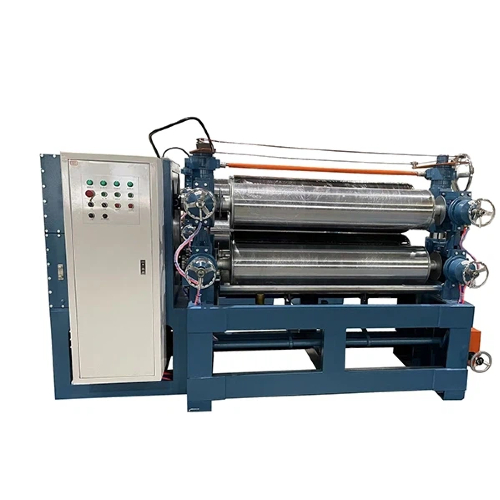
Automating the glue application process with glue spreaders significantly improves production efficiency. Glue spreaders can apply adhesive to large surface areas quickly and consistently, reducing the time spent on manual labor. This increase in efficiency allows manufacturers to scale up their production while maintaining high-quality standards.
The even distribution of glue provided by glue spreaders ensures that the bond between layers of wood is strong and uniform. This consistency in glue application results in high-quality finished products, such as plywood, laminated wood, and MDF, that meet industry standards for strength, durability, and appearance.
By precisely controlling the amount of glue applied to each surface, glue spreaders help reduce waste. This reduction in glue consumption leads to cost savings over time. Additionally, the automation of the glue application process reduces labor costs, further contributing to the overall cost-effectiveness of the operation.
Glue spreaders are ideal for both small-scale and large-scale wood processing operations. As demand for wood products increases, glue spreaders can be adjusted to accommodate higher production volumes, ensuring that manufacturers can meet market demands without sacrificing product quality.
When selecting a glue spreader for your wood processing operation, it’s important to consider factors such as production speed, the type of wood being processed, and the desired level of precision in the glue application. The right glue spreader will help optimize production efficiency and ensure that the adhesive is applied consistently for a strong bond.
Plywood manufacturers should prioritize glue spreaders that offer precision in glue application, especially when working with thinner veneers. High-speed glue spreaders are also essential for large-scale plywood production lines to keep up with high throughput while maintaining quality.
For laminated wood and furniture manufacturers, selecting a glue spreader that can accommodate different sizes of wood panels is important. Flexibility in adjusting the glue layer thickness can also help meet the specific bonding requirements of various types of wood products.
When choosing a glue spreader for flooring or MDF production, manufacturers should consider the type of adhesive being used and the required precision for bonding. Glue spreaders that are easy to clean and maintain are also beneficial for these high-demand operations.
Glue spreaders are essential tools in wood processing, offering significant benefits that enhance efficiency, quality, and cost-effectiveness in production. By automating the glue application process, manufacturers can ensure consistent, high-quality products while minimizing waste and reducing labor costs. Whether used in plywood production, laminated wood, MDF, or furniture manufacturing, glue spreaders are integral to modern wood processing operations.
At Linyi Zhonghe Import And Export Co., Ltd., we specialize in providing top-tier glue spreaders designed to optimize your production line. Our products are tailored to help manufacturers meet increasing demand while maintaining exceptional quality and consistency. By investing in the right glue spreader, you can improve operational efficiency, reduce production costs, and ensure a seamless manufacturing process. We invite you to contact us today to explore our range of advanced wood processing solutions and discuss how we can support your business needs.
Q1: What is the main function of a glue spreader in wood processing?
The main function of a glue spreader is to apply an even layer of adhesive to wooden surfaces, ensuring strong and uniform bonding between layers of wood.
Q2: How do glue spreaders improve production efficiency?
By automating the glue application process, glue spreaders reduce manual labor, speed up production, and ensure consistent adhesive coverage, improving overall operational efficiency.
Q3: Can glue spreaders be used for different types of adhesives?
Yes, glue spreaders are designed to handle various types of adhesives, including urea-formaldehyde, phenol-formaldehyde, and other resin-based glues used in different wood processing applications.
Q4: Are glue spreaders suitable for large-scale wood processing operations?
Yes, glue spreaders are ideal for large-scale operations as they can apply glue quickly and consistently across large surfaces, ensuring high throughput and consistent product quality.
Q5: What should manufacturers consider when choosing a glue spreader?
Manufacturers should consider factors such as production speed, the type of wood being processed, the desired level of precision, and the maintenance requirements of the glue spreader when making their choice.


