


Views: 0 Author: Site Editor Publish Time: 2026-08-12 Origin: Site


Unplanned downtime in a veneer mill directly erodes profit margins. It creates massive production bottlenecks downstream. Every stopped minute costs real money. Operations cannot afford reactive repairs. You must frame maintenance as a revenue-protecting protocol rather than a sunk cost.
Ignoring routine checks quickly leads to mechanical misalignments. These misalignments cause severe wood waste and ruined bearings. Machinery demands strict operational standards to function efficiently. Modern mills require proactive strategies to maintain profitability.
This guide outlines the evidence-based maintenance frameworks necessary for high yield. We detail the calibration standards and operator protocols required today. You will learn how to maximize the operational lifespan of industrial veneer equipment. Implementing these practices will stabilize your production floor and protect your bottom line.
Transitioning from reactive to preventive maintenance stabilizes veneer thickness tolerances.
A standardized lubrication and hydraulic fluid management schedule is the baseline for preventing catastrophic spindle or bearing failures.
In-house blade management using a dedicated knife sharpener drastically improves cut quality and reduces outsourced sharpening delays.
Integrating a Computerized Maintenance Management System (CMMS) bridges the gap between mechanical servicing and data-driven predictability.
Minor mechanical misalignments translate directly into inconsistent veneer thickness. Even a fraction of a millimeter variance impacts quality. It forces you to reject peeled sheets. These rejections drive up your waste percentages immediately. Yield degradation destroys expected profit margins. You lose raw material value when precision drops.
Scheduled preventive maintenance requires planned downtime. You control this schedule. Reactive maintenance forces unexpected shutdowns. Halted downstream processing creates exponential costs. Splicing, drying, and pressing lines stop completely. Operators stand idle while mechanics diagnose sudden failures. These bottlenecks cripple daily output targets.
You must establish key metrics for evaluating maintenance efficacy. We recommend tracking Overall Equipment Effectiveness (OEE). OEE highlights availability, performance, and quality. You should also monitor Mean Time Between Failures (MTBF). MTBF provides a clear picture of reliability. High MTBF means your maintenance program actually works. These data points turn subjective repairs into objective business strategies.
A reliable Veneer Production Machine requires disciplined daily routines. Operators must own these specific workflows.
You must clear wood debris and resin buildup constantly. Dust blinds critical sensors and jams limit switches. Blocked sensors cause carriage crashes and improper log loading. Operators should follow strict cleaning protocols between shifts.
Wipe down optical sensors using approved non-abrasive cloths.
Remove resin clusters from pressure bars using brass scrapers.
Vacuum fine wood dust away from electrical cabinet vents.
Visual inspections prevent major hydraulic failures. Operators must check hydraulic hoses for micro-leaks. They should verify pressure gauges against baseline tolerances. Catching a pressure drop early prevents weak log clamping. Strong clamping ensures smooth peeling.
Many operators believe more grease is always better. This "more is better" fallacy ruins equipment. Over-lubricating bearings pushes seals out. Excess grease attracts abrasive wood dust. This mixture acts like a grinding paste inside the bearing.
You must define frequency cycles based on machine run-hours. Calendar days ignore actual production volume. A machine running triple shifts needs different care than a single-shift machine.
Component | Lubrication Cycle (Run-Hours) | Action Required |
|---|---|---|
Spindle Bearings | 500 Hours | Purge old grease, apply measured OEM grease. |
Feed Screws | 250 Hours | Clean threads, apply light coat of oil. |
Hydraulic Cylinders | 1,000 Hours | Check rod seals, verify fluid integrity. |
Always source the correct high-temperature greases. High-load applications require specific OEM formulas. Substandard grease breaks down under extreme pressure. This breakdown causes catastrophic spindle failures.
You must standardize gap and pitch angle adjustments regularly. The pressure bar controls veneer smoothness. Incorrect pitch angles cause chatter marks. Operators need calibrated tools to set these gaps accurately. Guesswork leads to rough veneer sheets.
Routine electrical audits prevent thermal tripping. Maintenance teams must verify contactors for excessive wear. They should check for wire fatigue near moving tracks. Proper cooling and ventilation inside electrical cabinets are vital. Overheated drives shut down the entire peeling line.
Manual grinding limits your cutting precision. Inconsistent manual sharpening creates micro-scoring on the veneer surface. Human error alters the blade geometry slightly. This irregularity leads to rapid blade dulling during production. Dull knives tear the wood fibers instead of slicing them.
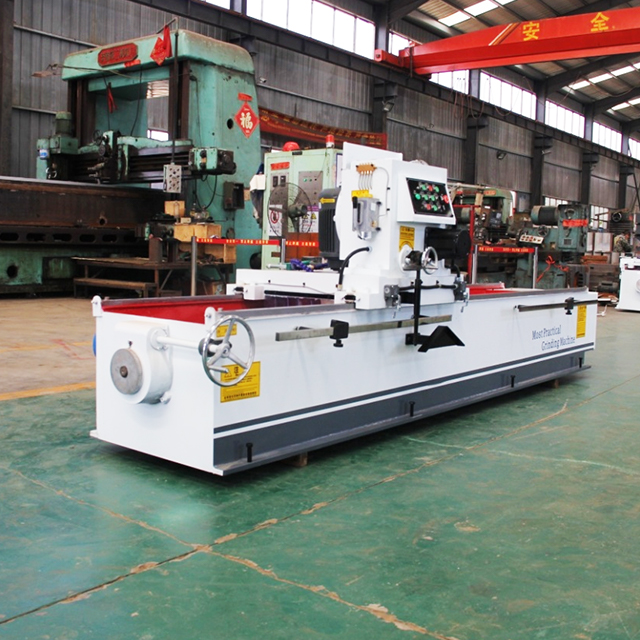
Controlling the sharpening process in-house stabilizes your supply chain. You eliminate outsourced sharpening delays. A dedicated Knife Sharpener guarantees exact bevel angles every time. Precise angles reduce cutting resistance. This lowers the strain on your main drive motors. The return on investment becomes clear through extended blade life and higher veneer grade.
You must evaluate sharpeners using specific criteria. Coolant system efficiency is crucial. Poor cooling causes metallurgical damage. It destroys the temper of the peeling knives. Softened knives dull instantly. Rigidity is another vital factor. The carriage must remain perfectly rigid during travel. Magnetic chuck reliability ensures the blade stays locked. Ultra-tight tolerances depend on these features functioning flawlessly.
Relying on tribal knowledge endangers your facility. Physical logbooks on the factory floor get lost or ignored. Digital logging replaces these vulnerable paper trails. A Computerized Maintenance Management System (CMMS) centralizes all service data. It makes maintenance history accessible to everyone.
You can track wear-parts lifecycles precisely. Chucks and feed screws have predictable failure curves. CMMS tracks these specific curves. It triggers automated procurement before failure occurs. Your storeroom always has the right part available. This feature-to-outcome approach eliminates waiting for expedited shipping.
Inline thickness gauges provide early warning systems. They integrate directly with your CMMS. Slight thickness variations signal initial machine wear. The software prompts maintenance interventions immediately. You fix the wear before tolerances exceed acceptable limits. This integration bridges quality control and mechanical servicing seamlessly.
The best maintenance schedule fails without operator buy-in. We call this the "human factor" risk. Mechanics cannot watch the machine every minute. Operators must take ownership of basic care.
Cross-training operators is an absolute necessity. They must perform baseline maintenance themselves. This approach follows Total Productive Maintenance (TPM) principles. You cannot rely solely on specialized mechanics for daily checks. Operators know the machine's normal sounds and vibrations best. They notice anomalies first.
Implementing a new regimen requires assumption transparency. You will see a decrease in raw production hours initially. Operators need time to adjust to new daily PM tasks. They will work slower while learning. However, this investment pays off quickly. You will net a higher overall yield within the first quarter. Consistent operation offsets the short-term time loss.
You need a framework for buying replacement parts. OEM parts cost more but offer guaranteed tolerances. Invest in OEM components for high-stress critical path items. Spindle assemblies and main drive gears require OEM precision. Acceptable aftermarket alternatives exist for non-critical consumables. Sensor brackets or standard hydraulic hoses often perform well from third-party vendors.
Assess suppliers based on their Service Level Agreements (SLAs). Guaranteed response times matter during a breakdown. Technical support availability should cover your operating shifts. Localized inventory storage reduces shipping delays significantly. You want partners who keep stock near your facility.
You must take immediate action to secure your production. Follow these specific next steps:
Conduct a full mechanical audit of your current peeling equipment.
Identify components showing early signs of thermal or mechanical fatigue.
Establish a prioritized critical spares inventory list.
Secure secondary suppliers for high-turnover consumables.
Reliable veneer production is an engineered outcome. It is never an accident. Strict operational protocols protect your capital investments directly. They ensure product consistency across every batch.
You must move away from reactive repair models. Standardize your daily inspections and lubrication cycles. Bring blade sharpening in-house to control quality. Adopt digital tools to track component lifecycles.
Take control of your machinery health today. Request a comprehensive maintenance audit from your engineering team. Consult a specialist for critical spare parts availability. Evaluate your current blade sharpening infrastructure to secure your yield.
A: Knife replacement frequency depends heavily on continuous run hours. Wood species density plays a major role. Hardwoods dull blades much faster than softwoods. Log prep quality also matters. Properly conditioned and debarked logs extend blade life. Generally, mills swap and sharpen knives once per 8-hour shift to maintain optimal cutting geometry.
A: Pressure bar misalignment is the leading cause of thickness variation. If the gap or pitch angle drifts, thickness fluctuates. Dull peeling knives also create uneven cutting forces. Additionally, worn spindle bearings cause the entire log to chatter. This chatter creates thick and thin spots across the peeled sheet.
A: Purchasing an industrial sharpener is usually more cost-effective for medium to high-volume mills. Outsourcing incurs heavy freight costs and risks transit delays. You break even quickly when running multiple shifts. In-house sharpening guarantees precise bevel angles. It eliminates downtime caused by waiting for external vendors to return your blades.
A: Operators must perform three critical checks daily. First, verify hydraulic fluid levels and operating temperatures to prevent overheating. Second, inspect all high-pressure hose integrity for micro-leaks or bulges. Third, clear all wood debris and resin from limit switches and optical sensors to prevent carriage crashes.


